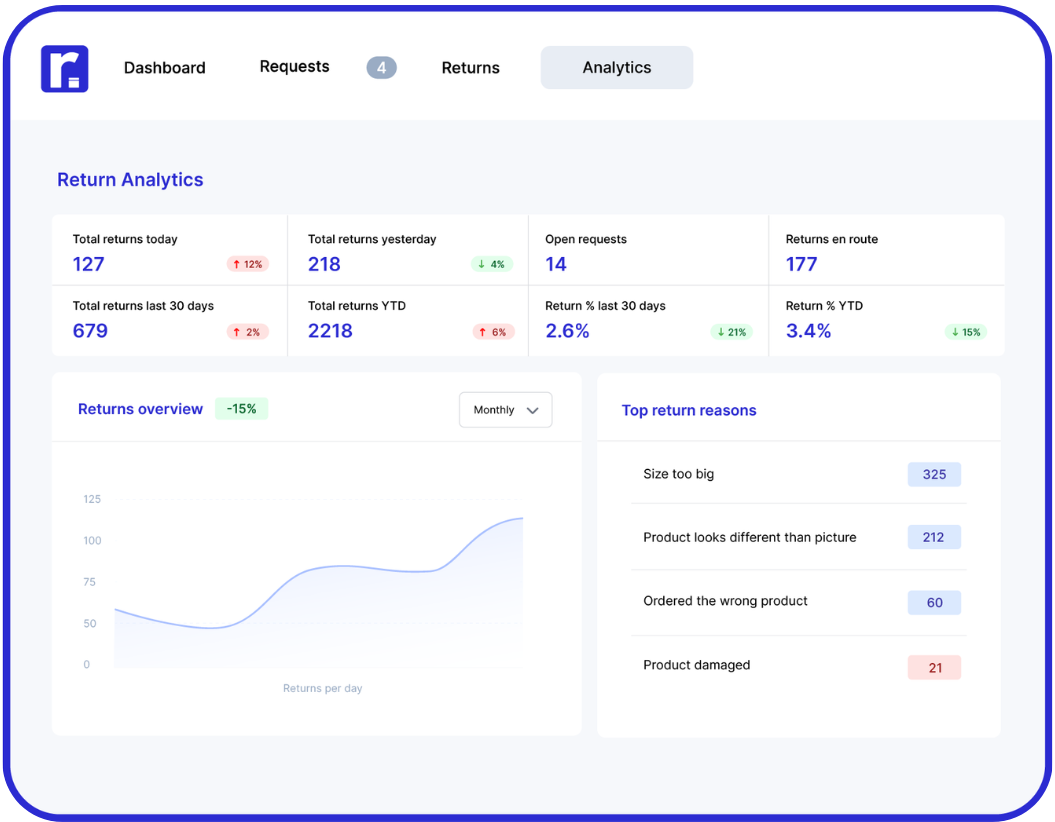
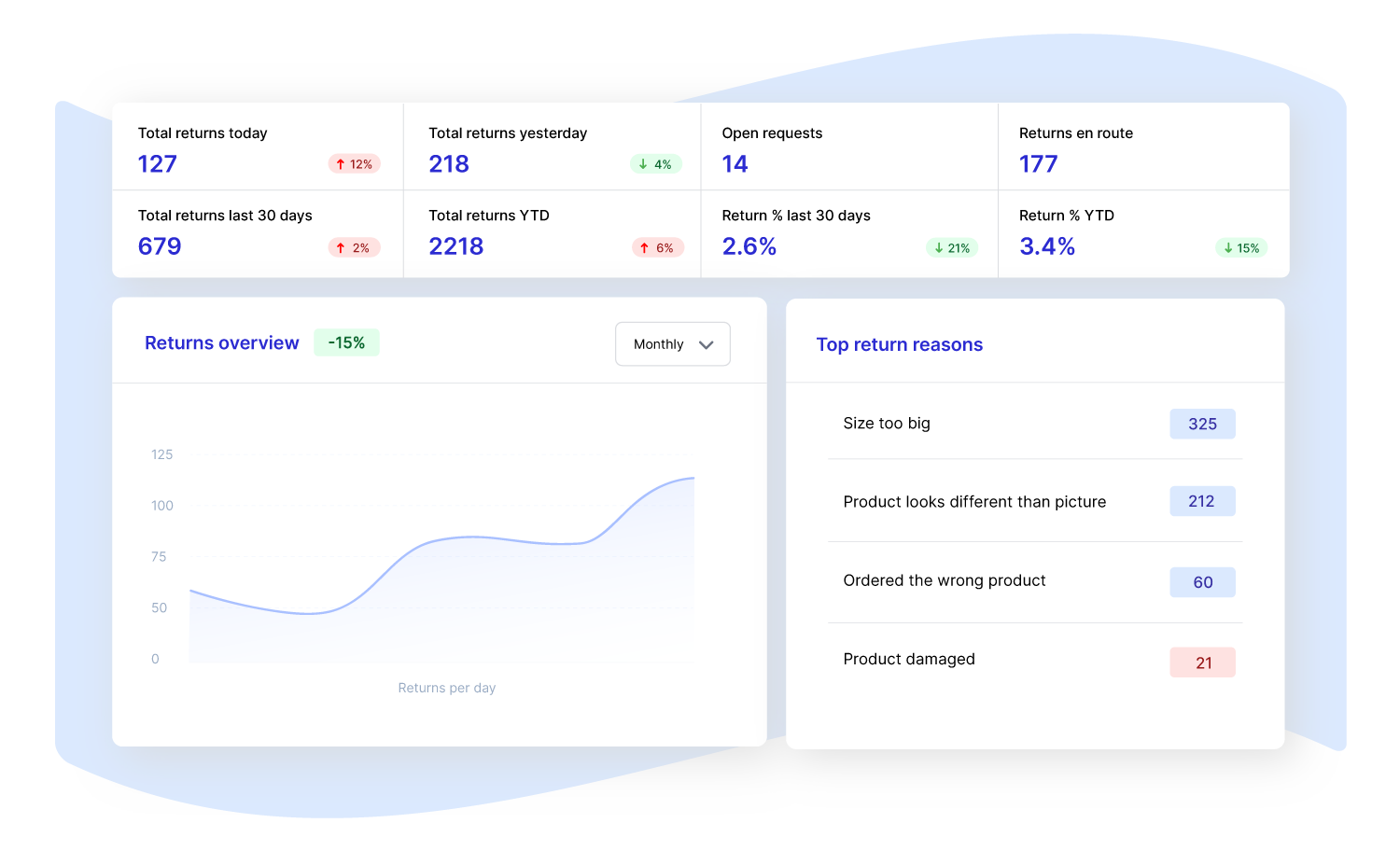
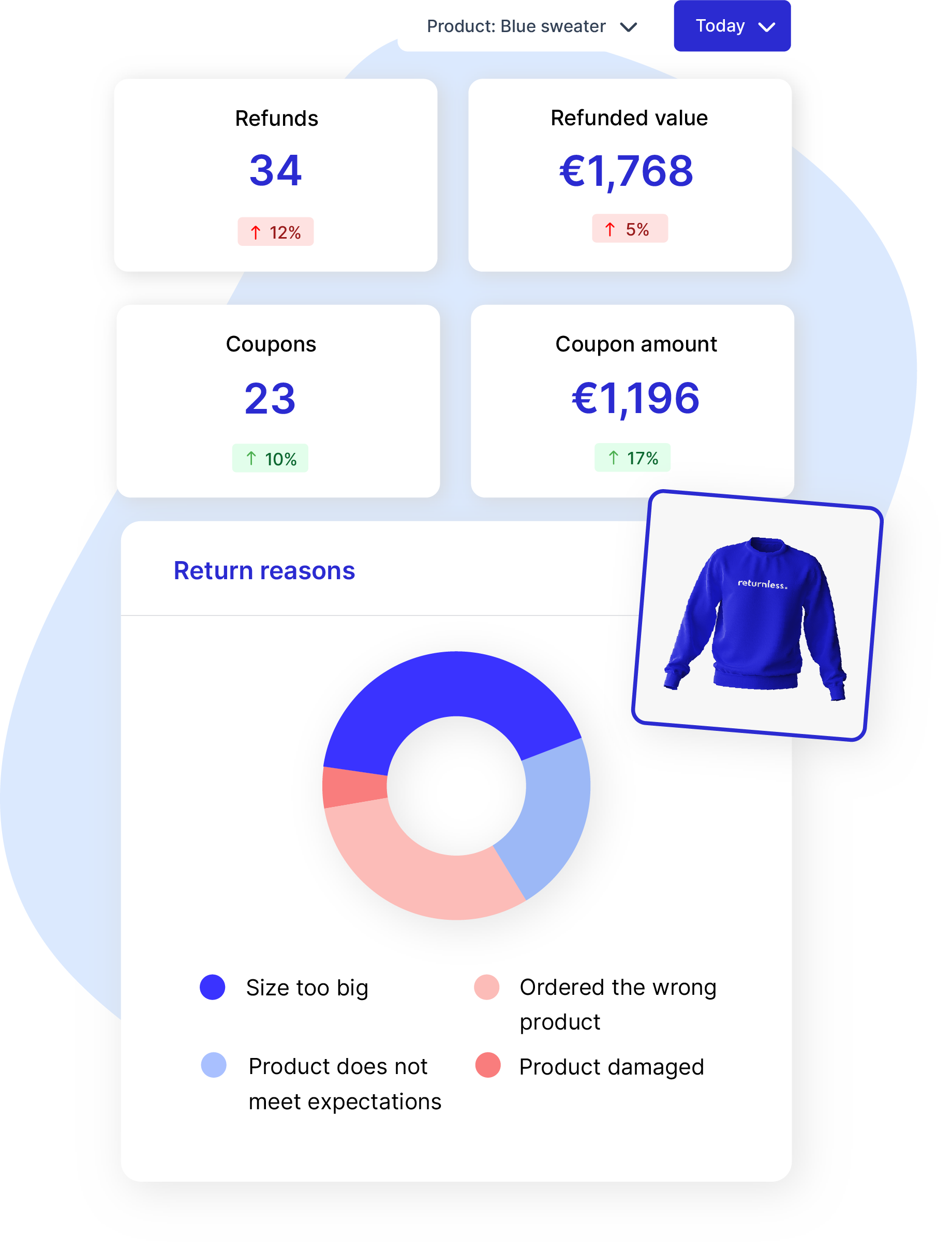
Merchants who process returns live and die by return data: which products come back, why they come back, and how much revenue those returns take with them. Returnless already collected all of it. What merchants wanted was to explore it without exporting a spreadsheet.

A large share of our customers were asking for this.
We work in sprints of six weeks. We thought we'd need one quarter, maybe two, to build the same kind of features Holistics already provides.
— Joost Kempe, Customer Success Lead at Returnless
A quarter or two of a developer team's time is a serious bet for any company. For Returnless, every sprint spent on dashboards was a sprint not spent on the returns automation that merchants were actually paying for. Joost sat in the middle of that tradeoff. He had worked as a return reduction specialist before joining Returnless, so he knew exactly why merchants needed the data, and he could see why his engineers couldn't drop everything to build it.
I understood the requests from my customers — I worked as a return reduction specialist myself, so I needed this kind of data and these deep dives to do my own work. But I also understood my development colleagues, who had to choose between fixing bugs, building new features, or focusing on insights.
Our customers required us to do both at the same time. I wanted to do both, because both were really valuable requests. I didn't want to tell a customer I can't help you with the analytics because I don't have the time.
— Joost Kempe, Customer Success Lead at Returnless
In the meantime, Returnless found a way to serve its larger merchants. The team could set them up with webhooks to push return data into their own middleware and build dashboards in Tableau or Looker Studio. That worked for merchants with their own developers, but most of Returnless's customers wanted the insights delivered to them, not a data pipeline to maintain.
We could support our larger customers through our webhook functionality, but that only worked for merchants with their own development resources. For everyone else, there simply wasn't a good option — until Holistics gave us a way to serve them too.
— Joost Kempe, Customer Success Lead at Returnless
The team's first instinct was to build it themselves. They have strong engineering and a clear vision of what good analytics should look like. But over time, it became clear that the real constraint wasn't ambition, but time and focus: engineering needed to stay on the processing of returns only Returnless could build, while analytics called for a specialist. Once that was clear, the decision came fast.
First we created this ourselves. In our product we have an analytics module, and our team had to develop all the dashboards to provide insights to our customers. We noticed it took a lot of time to create all the features our customers requested. We work with a lean, focused team, and engineering time is something we have to allocate really deliberately.
So we had to choose: create features that actually help customers process returns, or focus on insights and dashboarding. It took a while to get to this point. But the customer demand kept growing, and at some point it became clear we couldn't postpone the decision any longer.
— Joost Kempe, Customer Success Lead at Returnless
Chris Boer, Returnless' co-founder and Head of Product, ran the evaluation. The team measured each option against a clear checklist of what an embedded analytics layer had to deliver:
- ClickHouse compatibility and query performance, since Returnless already ran its analytics on ClickHouse and wanted to query it directly.
- Ease of embedding and row-level security, so every merchant sees only their own data inside the Returnless product.
- Customization and theming through CSS, so the dashboards could match the look and feel of Returnless.
- Version control, Git integration, and CI/CD, so analytics could be managed with the same discipline as the rest of the codebase.
- User-friendliness for business users, so non-technical teams could work with the data on their own.
- A cost structure that scaled sensibly with an embedded delivery model.
Two of these mattered most.
On the technical side, Returnless was already running its analytics on ClickHouse, so any tool had to query ClickHouse directly. On the product side, the dashboards had to feel like part of Returnless, not a bolted-on window into someone else's software.
Chris investigated everything. We got a demo from Holistics and from another provider. Holistics was the clear fit for what our customers had asked us for.
It became really clear in the first demo that Holistics would fit all the requirements our customers had reported to us, mostly because we could embed the dashboards really well into our product.
— Joost Kempe, Customer Success Lead at Returnless